The Social Life of Constitutions
/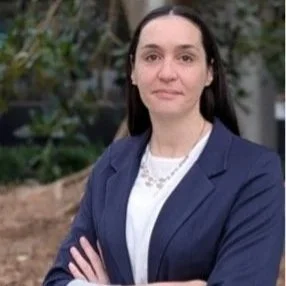
Melissa Crouch
Professor in the Faculty of Law & Justice, the University of New South Wales, Sydney, Australia.
At first glance, contemporary Myanmar is not a particularly attractive case study for scholars of comparative constitutional studies. An ugly, chaotic and traumatic series of ongoing conflict zones haunt Myanmar five years since the February 2021 coup.
Myanmar and the weight of violence there is the stuff that nightmares are made of. The metrics tell a horrific story: of political prisoners, people killed, people displaced, millions without access to healthcare or education, millions living below subsistence levels. These people live with a military which is at the heart of what has been dubbed the largest organised crime network in the world.
Yet even there, or precisely there, do constitutional texts matter, and this is why in my book The Palimpsest Constitution I call constitutional scholars to attention. I tell a story of constitutionalism, mired as it is in decades of colonial and postcolonial violence, through the lives of individual lawyers and people I met or whose work I read.
The book dwells on constitutionalism amid violence, conflict and war. The role of the military is once again expanding around the world (sometimes at the invitation of civilian authorities), from Asia to Latin America and Africa, and also in places like the US. In this context, my study of constitutional debates between civilian and military actors in Myanmar shows that this country is in fact not an anomaly or outlier, but rather an exemplar that offers an urgent and timely message about the centrality and imperative of advocacy for civilian rule through constitutional reform.
The two book panels held in 2026, at which the contributors to this blog series spoke, highlighted several key themes of the book for constitutional scholars that I draw out here: the importance of single country case studies; legal pluralism as a lens to study constitutions; the role of legal anthropology and methods in comparative constitutional studies more broadly.
First, this book is not merely a single country case study, even as it goes deep into Myanmar’s constitutional history and the ways it resonates in the present. Rather, it attempts to demonstrate how single country case studies are essential to comparative constitutional law. As Malini Sur and Visakesa Chandrasekaram attest, the story of constitutional law in Myanmar has resonance with places as similar, or diverse, as countries across South Asia, including India, Pakistan, Bangladesh and Sri Lanka, among others.
This book offers the case of Myanmar, a case otherwise perceived as ‘marginal’, as a way of expanding debates on constitutionalism in the Global South beyond liberal constitutionalism. Myanmar reveals the limits of our knowledge about constitution-making and our need for greater understanding of the many lives of constitutions.
I use the case study of Myanmar’s modern constitutional legacies from the late colonial era through its postcolonial, socialist, and military regimes to offer a wider reflection on constitutions in the post-colony. The Palimpsest Constitution argues that contemporary constitution-makers not only look to the latest in constitutional design of liberal democracies, but are also deeply invested in the contested legacies of the past.
In response to contemporary issues, the book implicitly informs debates on why there should not be diplomatic engagement with Myanmar. The situation has not changed since the book was written; the military regime continues its claims to rule and serious conflict continues to affect large segments of the population. In this regard, the book stands against the shift in position of the United States that seriously impact the prospects for return to civilian rule in Myanmar. The decision to abolish USAID has dealt devastating cuts to aid for pro-democratic and refugee groups based in Thailand. The decision to place Myanmar on the travel ban into the US has separated families affected by war, while the withdrawal of Temporary Protection Status for thousands of Burmese creates fear and uncertainty for their future. Further, the possibility of openness in diplomatic relations with America, despite the fact the country is still under military rule, makes a mockery of any commitment America has left to constitutionalism.
Second, the book is a contribution to studies of legal pluralism in constitutional law. Since the mid-20th century, many postcolonial states, including authoritarian regimes, have engaged in multiple constitution-making exercises, while pro-democratic civil society groups have resisted official constitutions through alternative constitution-making. The reality that constitutional reform debates in most countries feature official and unofficial constitutional texts raises a paradox: if constitutional endurance is supposed to be the normative goal, why have so many countries had multiple official and unofficial constitutional texts, and how do these past constitutions matter in the present?
This focus on past constitutional texts includes non-state constitutional texts. As Amy Cohen points out, focusing on non-state or alternative constitutions is unusual, but also imperative. I affirm the importance of constitutional pluralism in comparative law, by insisting that alternative constitutions – including various draft constitutions and non-state constitutions – may also be central to constitutional histories. Such alternative constitutions are a crucial means by which people show resistance through law to illiberal and authoritarian rule, often at extreme personal risk.
Third, contrary to much of the field, this book is focused on ‘showing’ the social life of constitutions through legal ethnography, rather than merely ‘telling’ others how to do legal ethnography. In my view, comparative constitutional studies are enriched when we put diverse methodological approaches to work through sustained case studies. Both Malini’s remarks on legal anthropology, and Shohini Sengupta’s and Suhail Rashid Bhat’s on methods more broadly, draw out the methodological inclinations of the book.
My approach to constitutional ethnography broadly affirms the social sciences as a human science, different from the natural sciences. Specifically, the book is in defence of interpretivism and against positivism. As anthropologists do, I weave narrative and stories into an analysis of struggles over constitutional reform.
In doing so, I implicitly suggest that there is no rigid or distinct binary between objective and subjective knowledge. Too often, comparative constitutional studies idolises detachment, objectivity and impartiality. Yet other methodological sensibilities, like anthropology, recognise that pure objectivity or impartiality is a myth.
I affirm subjective knowledge as a valid form of knowledge; in short, lived experience also counts as knowledge, and any claims to objective knowledge are inevitably tempered by positionality, time and place. This opens new ways of researching and writing for constitutional scholars, who are themselves often deeply connected to the places they are writing about.
I use my connections with people in Myanmar to advocate for scholarly engagement (as opposed to detachment), and for acknowledgement of our entanglement and investment in constitutional reform in certain contexts. My book puts relationality at the centre of studies of constitutionalism, as Malini identifies. By this, I mean that a rational or calculated ‘social contract’ view of constitutions and the people is insufficient to describe the various ways that people engage and interact with constitutions.
Overall, the book embraces hope as found in the social life of constitutions. While I acknowledge the tragedies of constitutions, I am drawn again and again to the margins where people persist in their struggle for civilian rule through alternative constitutional visions.
Acknowledgements
I express my sincere thanks to the Committee of the IACL Best Book Prize in Constitutional Studies for their recognition of The Palimpsest Constitution and for the book citation: Professor Tom Ginsburg, University of Chicago; Professor Kate O’Regan, University of Oxford; Professor Helle Krunke, University of Copenhagen and President of IACL; and Professor Xavier Philippe, University Paris Panthéon-Sorbonne. The IACL has a long-standing and significant presence in comparative studies of constitutional law, and so it is an honour to receive such an award. This book is for the people of Myanmar; may their fight for civilian rule not be ignored.
Melissa Crouch is Professor in the Faculty of Law & Justice, the University of New South Wales, Sydney, Australia. An overview of the book is available here, and an interview with the author here.
Suggested Citation: Melissa Crouch, ‘The Social Life of Constitutions’ IACL-AIDC Blog (5 November 2026) https://blog-iacl-aidc.org/2026-posts/2026/11/5/the-social-life-of-constitutions


