Constitutional Collapse and the Vanishing Social Contract in Libya and Sudan
/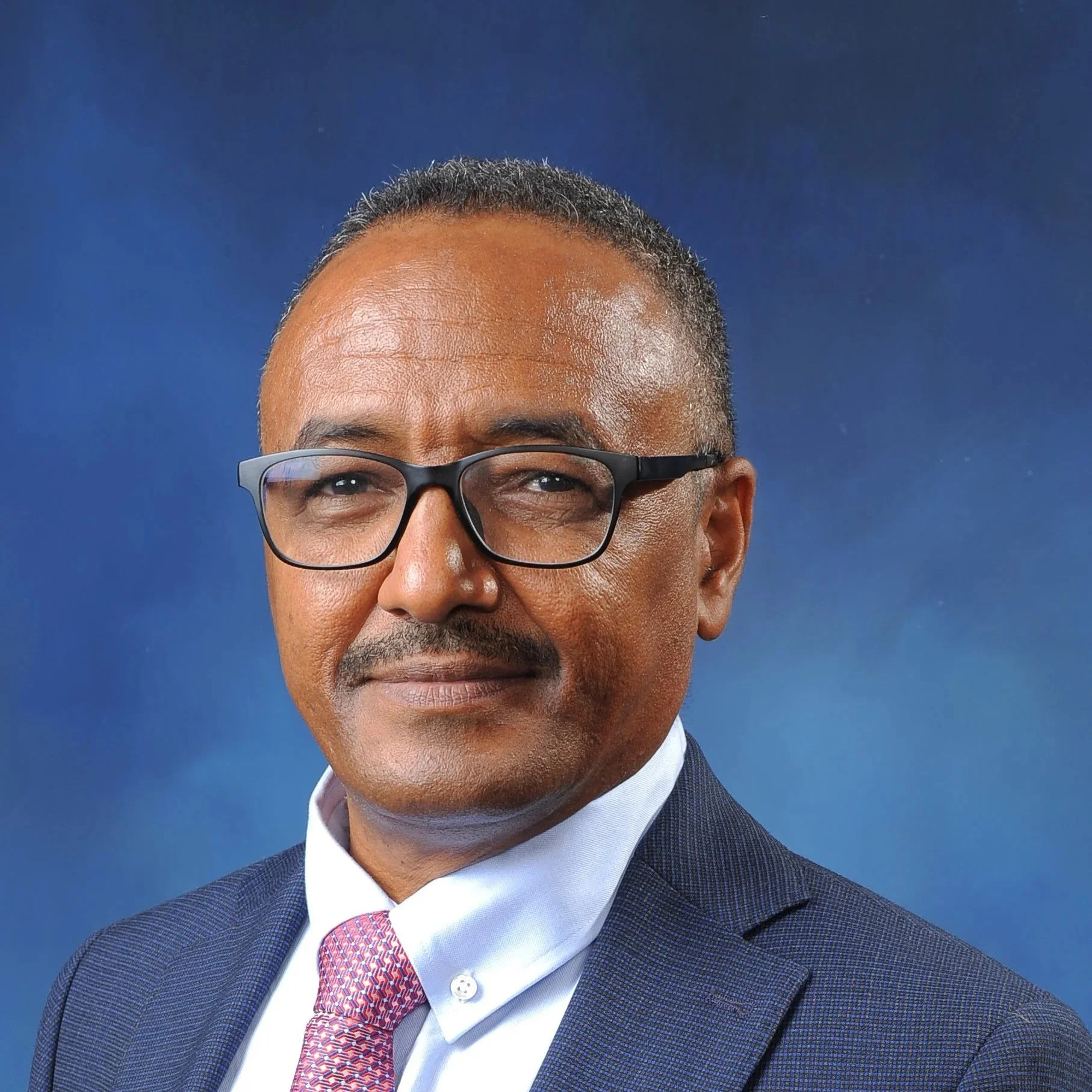
Sami Saeed
Dr. Sami Saeed is the Vice President of the African Network of Constitutional Lawyers.
The civil wars in Sudan and Libya illustrate the limitations of elite power-sharing arrangements and interim constitutional frameworks during transitions from institutional governance to internal armed conflict. These cases question the effectiveness of transitional constitutions in fragile states, particularly when military power is centralized and parallel governments are established with constitutional provisions that are subordinate to wartime operations. In the absence of people-led, inclusive social contracts developed through national dialogue, written constitutions are unable to safeguard citizens or uphold the rule of law. Limited political agreements, or interim constitutions, have proven inadequate for maintaining political stability during transitional periods.
The armed conflicts in Sudan (2023–present) and Libya (2011–present) exemplify the de facto suspension of constitutionalism during civil war. In both jurisdictions, the transition from institutionalized governance to kinetic conflict has resulted in the total collapse of the social contract, rendering mechanisms for the separation of powers and the protection of fundamental rights effectively non-executable.
Assassination of Constitutionalism
The constitutional and political framework of the transition in Sudan, after the collapse of Bashir regime, was designed in the 2019 Constitutional Charter and the 2020 Juba Peace Agreement (JPA). The constitution was systematically marginalized following the 2021 coup and the subsequent 2023 hostilities between the Sudanese Armed Forces (SAF) and the Rapid Support Forces (RSF). The conflict has specifically invalidated the JPA. Originally designed as a framework for wealth-sharing and security sector reform, the JPA has collapsed under the weight of military realignment. Consequently, Sudan currently operates in a legal vacuum in which the pre-war social contract has been superseded by military exigency.
Conversely, Libya’s constitutional crisis was precipitated by the 2011 revolution, which led to the immediate dissolution of the 1977 Green Book framework established by Colonel Gaddafi. Unlike Sudan, Libya lacked a pre-war transitional consensus, resulting in a fragmented landscape in which competing de facto authorities seek to monopolize power in the absence of a unified grundnorm. The failure of subsequent national dialogues in the post-2011 period reflects an inability to establish a new constitutional foundation capable of mediating tribal and political rivalries.
Background and similarities
The political scene following the fall of Colonel Muammar Gaddafi's government in Libya in 2011 closely mirrors that after General al-Bashir's ouster in Sudan in 2019. In both cases, the fall of political regimes and collapse of central governments left the two countries without constitutions and functioning institutions, resulting in intense competition among the new stakeholders for power and resources. New political forces advocating democracy and human rights, particularly supported by youth and women groups, gained prominence. In the two countries, national army generals sought opportunities to regain control through military means. Negotiations led by the United Nations failed in Libya and Sudan to restore a political transition or resolve disputes between the main political actors.
In summary, the crises in both countries arise from a lack of legitimacy and sovereignty, disputed approaches to power transfer, competition over resources such as oil in Libya and gold in Sudan, and weak state institutions unprepared for post-dictatorship governance.
Two governments and divided sovereignty
In both countries, Libya and Sudan, the legitimate government was unable either to control the whole region of the state or to conduct oversight at ground level.
In Sudan, the RSF, led by Mohamed Hamdan Dagalo ("Hemedti"), has taken control of all five Darfur states and much of the Kordofan region, which comprises three states. As a result, the RSF now controls most of the national natural resources, such as gold, oil, livestock, and Arab gum. SAF control the eastern, central, and northern regions of Sudan, operating under their own administration. On August 30, the RSF formed a parallel government, the Government of Peace and Unity in Nyala, the capital of South Darfur, in partnership with various military groups and opposition parties, including the Sudan People's Liberation Movement/North (SPLM/N). This new government in Nyala consists of a 15-member ruling council led by General Hemedti and a civilian cabinet headed by Prime Minister Mohamed Hassan Altaeishi, a former member of the Transitional Sovereignty Council following the fall of the Al-Bashir regime in 2019. With executive authority based in Nyala and the SAF consolidating control in Port Sudan, Sudan became divided between two governments: the internationally recognized SAF-led administration in Port Sudan and a parallel RSF-led government in Western Sudan. Both factions drafted constitutions for their respective territories, but neither established a comprehensive constitutional framework.
Ironically, and in a repetition of the tragic experiences in North Africa, Sudan, after April 2023, followed the same path as Libya. Libya is currently split into two main spheres of influence, though local control is often more granular. The Government of National Unity (GNU), led by Prime Minister Abdul Hamid Dbeibah is the internationally recognized administration which controls the West part of Libya (Tripolitania). The Libyan National Army (LNA), commanded by Field Marshal Khalifa Haftar, controls significant regions and cities in the East and South of Libya – the majority of Libya’s Oil Crescent and the southern border regions. The LNA established a parallel civilian government (the Government of National Stability or GNS) in eastern Libya, as a rival administration based primarily in Benghazi and Sirte, and is not internationally recognized as the official government.
A government of warlords – not of law
Following the overthrow of Gaddafi, Libya’s new political leaders adopted a Constitutional Declaration in August 2011 as a temporary framework for elections and drafting a permanent constitution. The CDA completed a draft in 2017, but criticism and lack of consensus stalled progress. As a result, Libya no longer has a unified constitution, and the two rival parties apply the document with separate amendments. The SNG and the House of Representatives used constitutional amendments and the 2011 declaration to consolidate elite power. The 12th and 13th amendments let so-called SNG political elites manipulate the constitution to stay in control, avoid elections, and limit access to power. Debates continue over dual citizens' eligibility to serve as president and centralized economic and sovereign appointments.
In the context of war, the dynamics observed in Libya are similarly reflected in Sudan. Both SAF and RSF utilize the constitutional framework to legitimize and entrench their respective military rule within their territories. The SAF amended the 2019 Constitutional Charter in 2025, removing civilian roles in government to consolidate authority under a military-led council and through emergency decrees. Concurrently, the RSF established parallel constitutions and civil administrations in western regions to institutionalize its control on the region. This creates a paradoxical state of 'nominal constitutionalism,' wherein the existence of a formal text serves not as a constraint on power, but as a hollow veneer for its unfettered exercise.
The Necessity of Dialogue
Since civil wars erupted in both countries, they lack a unified constitution because the social contract collapsed. In Libya, political factions have not agreed on a transitional constitution since Gaddafi's overthrow, so the country remains without one. In Sudan, neither the government in eastern Sudan nor the one in the west shows any respect for the constitution as the two factions treat constitutional documents not as binding rules, but as flexible tools to legitimize their military powers.
During political transitions, the legal trajectories of both nations suggest that limited political agreements, such as the JPA or an interim constitution, are insufficient to maintain political stability or prevent civil war. The shift from political disagreement to a comprehensive peace arrangement requires drafting an inclusive social contract through broad national dialogue. Without a stable constitutional foundation acceptable to all stakeholders, both Sudan and Libya remain governed by force rather than the rule of law.
Ultimately, the restoration of sovereign legitimacy necessitates a transition from the arbitrary exercise of power to a durable constitutional order founded upon a robust, inclusive, and legally binding national consensus towards a social contract.
Dr. Sami Saeed is the Vice President of the African Network of Constitutional Lawyers.
Suggested Citation: Sami Saeed, ‘Constitutional Collapse and the Vanishing Social Contract in Libya and Sudan’ IACL-AIDC Blog (12 March 2026) https://


![Xx1088_-_Seoul_city_nightscape_during_1988_Paralympics_-_3b_-_Scan [test].jpg](https://images.squarespace-cdn.com/content/v1/5af3f84a4eddec846552ea29/1527486925632-3VZP3ASLAHP1LJI0D9NJ/Xx1088_-_Seoul_city_nightscape_during_1988_Paralympics_-_3b_-_Scan+%5Btest%5D.jpg)
