How Can Linguistics Be of Use to Comparative Constitutional Law?
/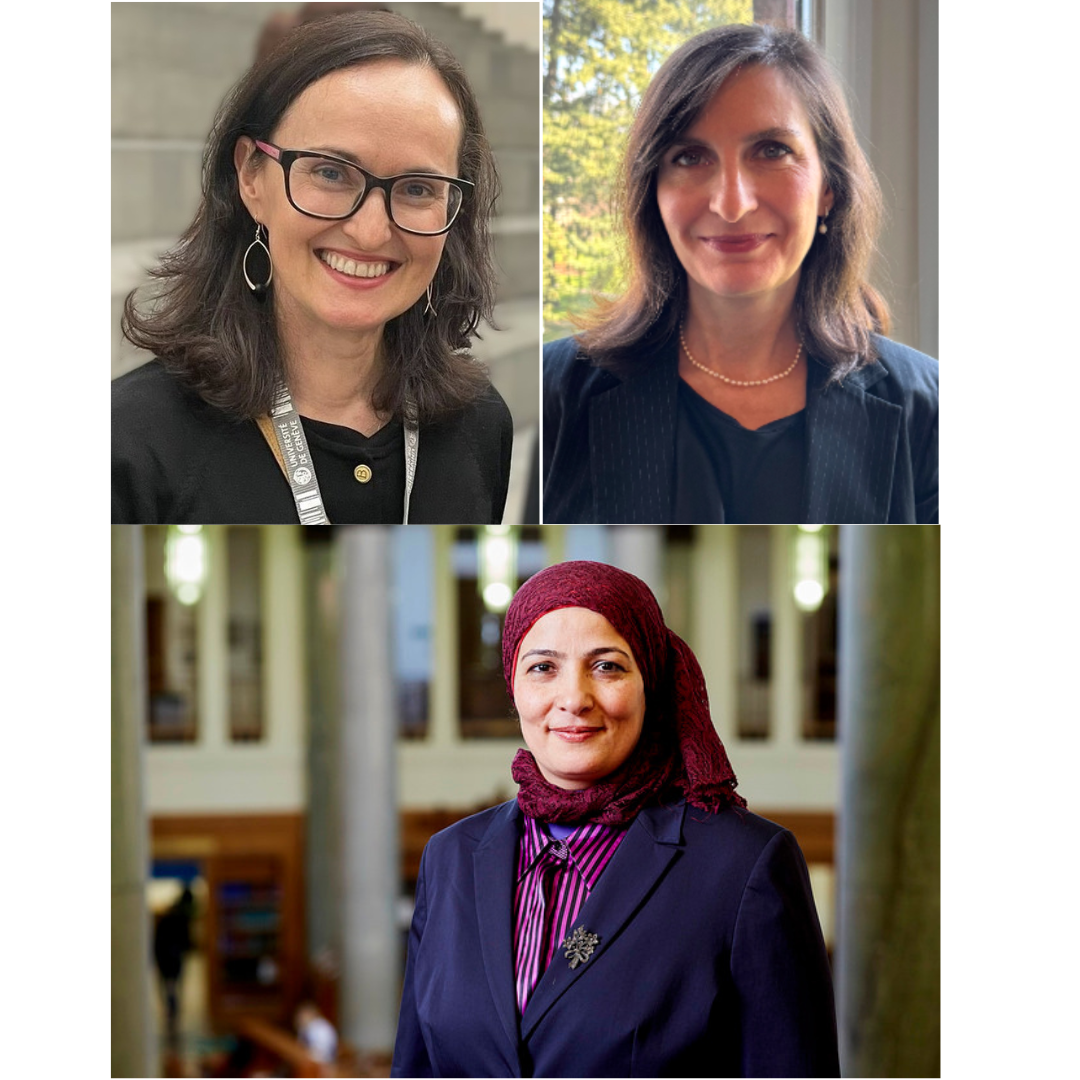
Łucja Biel, Hanem El-Farahaty & Francesca L. Seracini
Łucja Biel is a Professor of Linguistics and Head of EUMultiLingua research group in the Institute of Applied Linguistics at the University of Warsaw, Poland.
Hanem El-Farahaty is a Professor of Linguistics, Translation and Interpreting in the School of Languages, Cultures and Societies at the University of Leeds, UK.
Francesca L. Seracini is a Tenure Track Assistant Professor of English Language, Linguistics and Translation at the Department of Linguistic Sciences and Foreign Literatures of Università Cattolica del Sacro Cuore, Milan.
Comparative constitutional law compares constitutions from different jurisdictions around the world. At first glance, this may look like a purely legal enterprise. Yet constitutions are also linguistic artefacts. They mobilise language to encode values, construct collective identities, and normalise particular visions of the state and society. Comparisons of constitutions therefore hinge on how these texts use language and on how that language travels across borders through translation. Translation is never neutral: it is an interpretative act that can foreground, blur or reshape meaning. In this post, we show how linguistic methods, often described as part of the “new” postmodern interdisciplinary turn in comparative law (see e.g. Siems), can enrich comparative analysis. We illustrate this through two case studies which apply a quantitative corpus-linguistic approach and a qualitative method of metaphor analysis.
Case Study 1: What Can Corpus Methods Tell us about Constitutions?
A corpus is a large electronic collection of texts accessed through specialised software. Corpus analysis relies on a set of analytical techniques that support comparison across large bodies of text. These include wordlists, which are used to identify frequently occurring terms, and keyword analysis, which highlights terms that distinguish one group of texts from another. Concordance allows examination of how terms and concepts are used in context, while parallel concordance examines how terms or grammatical structures are translated across languages. These techniques enable systematic examination of constitutional language and the identification of patterns across texts.
In this case study, we use a Comparable Corpus of Constitutions comprising 18 constitutions either drafted in English or translated into English. Texts in this corpus were randomly sampled to include constitutions from different legal systems, cultural contexts, and continents, based on the availability of up-to-date English versions. Within that broader dataset, we created an Arabic focus-corpus consisting of Egypt, Morocco, and Saudi Arabia and compared it with the remaining non-Arabic constitutions.
Identifying key constitutional concepts
The analysis began with an examination of the frequency of nouns. Terms such as law, state, constitution, right, power, and people appear across most constitutions in the corpus. Their high document frequency indicates that these concepts recur across constitutions rather than being confined to individual texts. This suggests that constitutions share a common set of core concepts, even when they are shaped by different political and cultural contexts.
What makes Arabic constitutions distinct?
To examine differences between constitutional traditions, the study used keywords to compare Arabic and non-Arabic constitutions. It identified terms with higher cultural significance in the Arabic corpus, e.g. Islamic, Shura, Shari’ah, and Allah. The Arabic constitutions also show a recurring emphasis on social justice, solidarity, and unity. This pattern reflects the social and political contexts in which they were drafted, including demands for social equity and inclusive governance in the period following the Arab Spring.
Frequency data alone does not explain how constitutional concepts function and needs to be supplemented by concordance and collocate analysis, close reading, and attention to the socio-political contexts in which constitutions were drafted. In the Arabic corpus, social justice is especially prominent in Egypt and Morocco, where it appears in provisions concerning ‘state responsibility’, ‘welfare’, ‘equality’, and ‘development’, and can be linked to demands for social equity and more inclusive governance in the post-Arab Spring period. In the non-Arabic corpus, community is especially prominent in Spain, France, and South Africa, where it is associated respectively with ‘self-governing’, ‘territorial’, and ‘linguistic’, ‘religious’, and ‘cultural’ community, while in South Africa the related emphasis on ‘national unity’ is linked to the transition from apartheid to democracy and the constitutional effort to overcome deep social divisions. These patterns suggest not simply a difference in vocabulary, but distinct constitutional priorities shaped by different models of state organisation, community-building, and political transition.
Why does this matter for comparative law?
Corpus analysis does not replace traditional approaches to comparative constitutional law, but it can complement them. This study shows how corpus methods allow comparative constitutional research to move beyond selective examples toward the global analysis of recurring patterns across texts that may not be apparent through close reading. The study also illustrates how corpus-based techniques can scale up the analysis of legal documents and systematic comparison across constitutions.
Case study 2: Metaphors in Constitutions: What they Reveal about how Societies Understand Freedom
Constitutional language often carries symbolic meanings. Metaphors — ways of describing abstract legal concepts via more concrete experiences — play a vital, yet under-examined role in constitutional discourse. Metaphor analysis can reveal the cultural assumptions underlying constitutional conceptions of fundamental rights.
Metaphors and legal thinking
In legal practice, abstraction is unavoidable. Rights and liberties are intangible ideas. Metaphors help link these intangible ideas to familiar physical or spatial experiences. Conceptual Metaphor Theory (CMT) posits that a target domain (an abstract concept) is understood via a source domain (a more tangible concept). For example, the phrase breach of rights evokes the image of breaking through a boundary. Rights are implicitly conceptualised as barriers that protect a space, and violation of rights appears similar to a physical intrusion.
A comparative study of personal liberty
To illustrate the cultural insights metaphors can provide, we analysed how personal liberty is metaphorically framed in four constitutions: those of Ireland, Italy, Egypt and Poland. Using the Metaphor Identification Procedure (MIP), which differentiates between a word’s literal and contextual meaning, we identified the metaphorical expressions referring to personal liberty and how they shape meaning. A comparison with the English translation of these constitutions also revealed culturally specific conceptualisations.
Ireland: liberty as a possession
The Constitution of Ireland states that “No citizen shall be deprived of his personal liberty save in accordance with law”. The word deprive, in its literal sense, refers to taking something away from a person, typically a possession. This frames liberty as something that belongs to the individual and can be removed. By metaphorically linking liberty to possessions, the text suggests an analogy between detention and the loss of a personal possession.
Italy: liberty as a protected or sacred space
The Italian Constitution provides that ‘La libertà personale è inviolabile’. The Italian term inviolabile connotes forced entry or intrusion into a place — sacred or otherwise. Liberty acquires connotations of a protected space or entity. Violating it is therefore akin to trespass. By framing liberty as a sacred or inviolable space, this metaphor reinforces the right’s symbolic weight and its normative importance. The English translation (“Personal liberty shall be inviolable”) retains the word inviolable, preserving much of the underlying imagery.
Egypt: liberty as inherent and untouchable
The Constitution of Egypt states that الحرية الشخصية حق طبيعي، وهى مصونة لا تُمس، which translates literally as personal freedom is a natural right that is safeguarded and not to be touched. The descriptor natural frames liberty as an intrinsic human attribute, tied to natural law. The phrases "safeguarded" and "not to be touched" evoke the protection of personal possessions or garments. Metaphors conceptualise freedom as a tangible asset that must be protected. Interestingly, the English translation from the Constitute Project (https://comparativeconstitutionsproject.org/) uses “infringed upon”, which alters the image and shifts it toward spatial encroachment.
Poland: liberty as an object with boundaries
The Constitution of Poland states that ‘Każdemu zapewnia się nietykalność osobistą i wolność osobistą. Pozbawienie lub ograniczenie wolności może nastąpić tylko na zasadach i w trybie określonych w ustawie’. It distinguishes between nietykalność osobista (literally, personal untouchability) and wolność osobista (personal freedom). Terms such as pozbawienie (deprivation) and ograniczenie (imposing a boundary) frame liberty as something that can be taken away or confined. The term nietykalność (untouchability) further frames liberty as something tangible, protected from physical interference. The fact that both the Constitutions of Poland and Egypt rely on this imagery suggests that the metaphor may stem from a basic, and possibly universal, human experience of bodily integrity, which makes the abstract notion of liberty more concrete.
The English translation introduces shifts. Rendering nietykalność as inviolability replaces the Polish term’s strongly physical sense of untouchability with a broader notion of violation. A similar shift occurs in the translation of wolność as security, which suggests protection from harm rather than self-determination. Thus, even small lexical adjustments can reshape the metaphors that frame a constitutional right and influence how it is understood by an international audience.
Why metaphor analysis matters
Metaphor analysis exposes both shared foundations and culturally specific understandings of constitutional rights. It demonstrates the importance of translation, as subtle shifts in metaphors can alter interpretations across legal cultures. Ultimately, treating constitutions as symbolic texts enriches our understanding of how societies articulate and protect the principles they deem fundamental.
Conclusions
Linguistic methods can complement traditional comparative constitutional approaches. Translation provides access to constitutions and diverse legal cultures, but this access is often filtered through English, which can distort meaning, impose Anglo-centric perspectives, and reproduce existing power imbalances. When working with translations, comparatists should also apply linguistic methods to detect shifts in meaning, uncover hidden assumptions, and engage more critically with constitutional texts across languages.
Łucja Biel is a Professor of Linguistics and Head of EUMultiLingua research group in the Institute of Applied Linguistics at the University of Warsaw, Poland.
Hanem El-Farahaty is a Professor of Linguistics, Translation and Interpreting in the School of Languages, Cultures and Societies at the University of Leeds, UK.
Francesca L. Seracini is a Tenure Track Assistant Professor of English Language, Linguistics and Translation at the Department of Linguistic Sciences and Foreign Literatures of Università Cattolica del Sacro Cuore, Milan.
Information on how to purchase The Language of Comparative Constitutional Law: Questioning Hegemonies (Hart Publishing, 2025) can be found here, along with a discount code for purchase.
Information on how to purchase The Language of Comparative Constitutional Law: Questioning Hegemonies (Hart Publishing, 2025) can be found here, along with a discount code for purchase.
Suggested Citation: Łucja Biel, Hanem El-Farahaty, Francesca L. Seracini, ‘How Can Linguistics Be of Use to Comparative Constitutional Law?’ IACL-AIDC Blog (26 March 2026) How Can Linguistics Be of Use to Comparative Constitutional Law? — IACL-IADC Blog


![Xx1088_-_Seoul_city_nightscape_during_1988_Paralympics_-_3b_-_Scan [test].jpg](https://images.squarespace-cdn.com/content/v1/5af3f84a4eddec846552ea29/1527486925632-3VZP3ASLAHP1LJI0D9NJ/Xx1088_-_Seoul_city_nightscape_during_1988_Paralympics_-_3b_-_Scan+%5Btest%5D.jpg)
