The Caribbean’s Dyadic Constitutions
/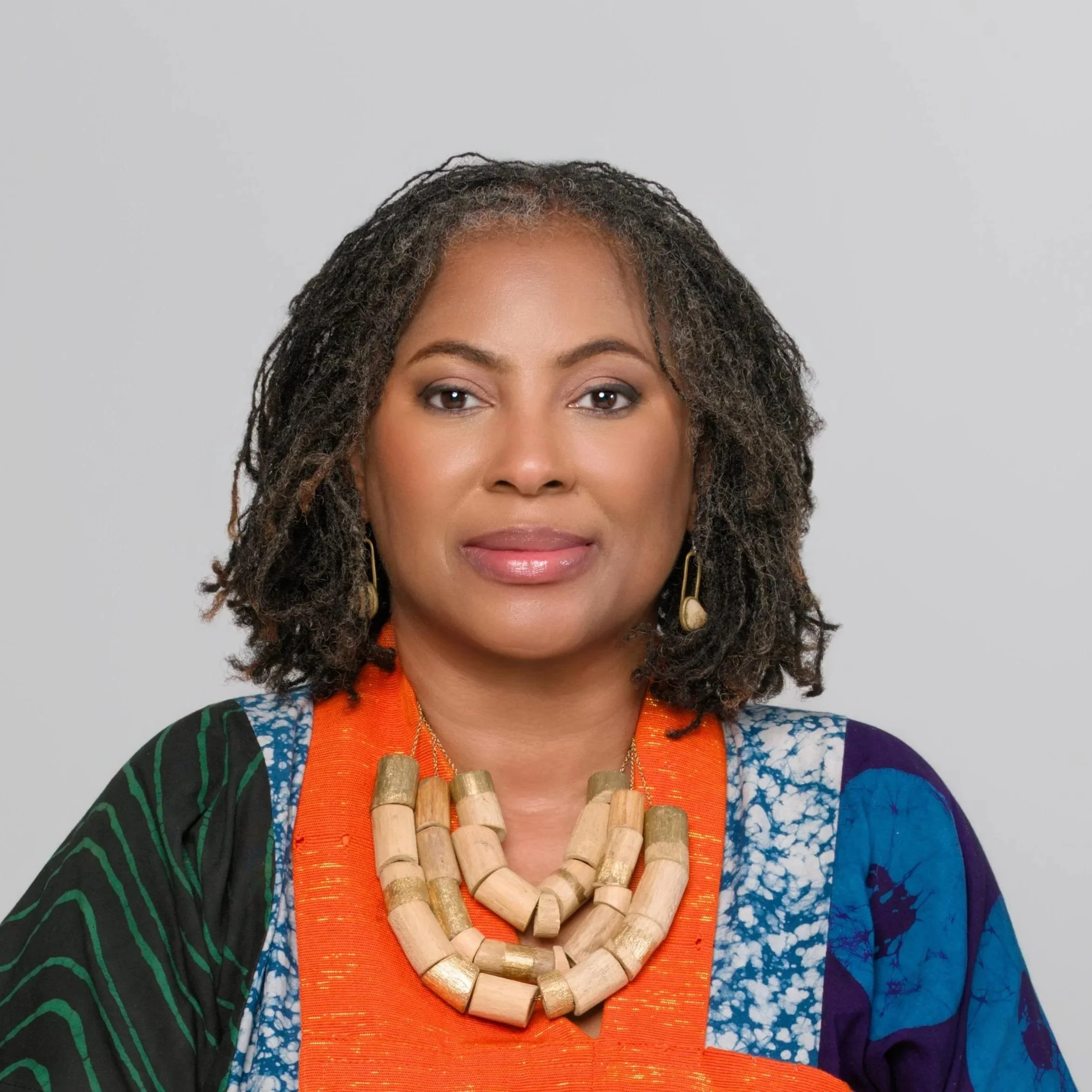
Tracy Robinson
Tracy Robinson is a Professor at The University of the West Indies, Mona, Jamaica.
Dyadic constitutionalism is an understudied form of constitutional pluralism found in some small jurisdictions. It draws on the vocabulary of modern constitutions, yet colonial ties and imperial guardianship shape governance arrangements substantially in these jurisdictions. An internal and external constitution form dual ‘sites of constitutional authority’ that operate in tandem. Structurally, the dyadic constitution references, is entangled with, and may owe its existence to an external constitution that is imperial.
The Caribbean has the largest concentration of small jurisdictions in the world. The Anglo-Caribbean is the focus of the chapter, ‘Dyadic Caribbean Constitutions’, in Perham, de Visser and Dixon, Small State Constitutionalism (Hart Publishing 2026). This subregion comprises 18 small jurisdictions, a dozen of which are former UK colonies and now independent states, and the smallest six of which are British Overseas Territories (BOTs). Only two, the oldest states, Jamaica and Trinidad and Tobago, have populations that exceed 1.5 million people. Today, two-thirds of Anglo-Caribbean jurisdictions have populations of less than 200,000, and four of the six non-independent territories have populations below 40,000.
In the small jurisdictions in the Anglo-Caribbean, decolonisation was neither linear nor inescapable. The decline in the British Empire after World War II animated British imperial constitutionalism. Written constitutions, more of which were drafted or finalised in London than anywhere else in the world in the 20th century, became not just a universal of the nation state, but modern tools of reordering empire and measuring or parsing sovereignty. Dyadic constitutions bear the hallmarks of modern constitutions: they identify distinct political communities; they say who belongs; they incorporate bills of rights; they establish a form of democratic governance and treat the constitution as the fundamental law; and they explicitly contemplate constitutional review.
Decolonisation is often thought of as a process that culminates in independence and a new constitution marking it. Dyadic constitutionalism in the Caribbean reveals what I call the longue durée of decolonisation. The historical, legal and political processes identified with the postwar decolonisation involved changing relationships between metropoles and colonies that were not unidirectional or necessarily absolute, but were shaped by the ascendance globally of a right to self-determination for colonial countries and peoples. By design, imperial constitutional regulation of small Caribbean states persisted after dates of independence. That regulation became locked in by the durable products of asymmetrical cooperative constitution-making between the metropole and the colonised in the second half of the twentieth century.
A distinction between the independent nation-states and non-sovereign overseas territories is often the point of departure for Anglo-Caribbean constitutional studies. Dyadic constitutionalism transcends this divide. It operates in non-independent and most independent Anglo-Caribbean countries. The scaffolding for these dyadic constitutions is UK imperial laws and policies. Dyadic Caribbean constitutional infrastructure interpolates British institutions in Caribbean governance, including the Judicial Committee of the Privy Council (JCPC), His Majesty and his representatives, the UK Parliament and the UK Government. The strong relevance of an imperial constitution to BOTs, which are part of the British realm, is expected. The dyadic constitution is also a feature of many small independent states in the Anglo-Caribbean. Most have prototypical constitutions that were ‘tailored’ or refined in London. Most are inaugurated by a UK Order in Council, and these constitutions deeply entrenched the British King as head of the independent state and the UK’s JCPC as the final court of appeal.
The structural features of the dyadic Caribbean constitution do not negate its flexibility. The dyadic constitution is dynamic, involving ‘constitutional conversation and contestation’. It is suffused with tensions, and negotiated through the transatlantic, pan-Caribbean and hemispheric movement of people, ideas, institutions and law. Dynamism in the dyadic constitution is especially strong in the small multi-island polities in the northwestern Caribbean and Atlantic Ocean – the state of Bahamas, and the territories of Bermuda and the Cayman Islands – where economic wealth affords ‘non-sovereign’ Caribbean jurisdictions more ‘practical autonomy’.
I use contentions about gender and ‘legitimate’ intimacies to explore principles and practices that are shaping dyadic Caribbean constitutionalism. Thomas Blom Hansen and Finn Stepputat point out that ‘the body is always the site of performance of sovereign power, which becomes most visible in states of … marginality.’ Gender and sexuality debates, especially related to marriage equality, are dominated by tensions and anxieties about the threat of imperial extraterritorial intervention, and these debates have become ‘pivotal … for indexing sovereignty’ in small, constitutionally dyadic jurisdictions. Inasmuch as relations and representations of gender, sexuality and family are foundational to discourses about the nation-state, gender and sexuality controversies are heightened in small jurisdictions that, to borrow from Lee Cabatingan, cite the nation-state, claim relatedness to it, while acknowledging an ‘irreducible distance’ from it.
Some of these controversies have made their way to the extraterritorial appellate jurisdiction of the JCPC. In 2022, in appeals from the overseas territories of Bermuda and the Cayman Islands, the Privy Council ruled that there was no constitutional right to same-sex marriage in either territory. In a 2023 appeal from the Bahamas, the Privy Council held that the right to citizenship of persons born in the Bahamas, of a Bahamian ‘parent’, included persons born outside a marriage to a Bahamian father and a non-Bahamian mother, notwithstanding language in the Constitution that restricted citizenship acquisition from unmarried fathers.
With these cases as the backdrop, I examine the asymmetrical ‘cooperative’ constitution-making between the colonised and the metropole, and its gendered products and subjects during the independence period. I argue that Caribbean men were made through the process and products of constitution-making. ‘Genetic defects’ codifying unequal citizenship for women and gender inequality, such as those found in the Bahamas Constitution 1973, were locked in by deeply entrenched provisions. With two constitutional referenda held in 2002 and 2016 failing to reform these defects, the older dyadic independence constitutions are increasingly associated with durability, undue constraint and endemic failure.
I also explore the growing significance of collaboration, consensus and political compromise as modern markers of self-determination and self-definition that can set the boundaries for constitutionally acceptable intimacies. The more ‘modern relationship’ between the UK and its overseas territories in the twenty-first century retains imperial oversight. However, it has sharpened the self-determination and political identity of territories like Bermuda and the Cayman Islands. The JCPC’s extension of the European Convention on Human Rights to the Caribbean as a supranational layer of regulation energised the dyadic constitution in the overseas territories. Bermuda and the Cayman Islands hedged against the uncertainty of the European Court of Human Rights’ future interpretation of sexual rights with aversive lawmaking and constitution-making, and they mined the margin of appreciation to exercise ‘sovereign’ national decision-making like a member state.
The noisy embodied political conflicts in small jurisdictions about legitimate sex emphasise the relational politics of dyadic constitutionalism and the tensions in modern constitutionalism’s valuing of constitutional endurance and constitutional change through direct democracy and political compromise. This form of constitutionalism also pushes the recent Southern turn in comparative constitutional law beyond the question of the legacies of the colonial past or the aftermath of colonialism and toward reflecting on the imperial constitutional present in many small jurisdictions
This blog post is part of the IACL Blog symposium Small State Constitutionalism, which presents some of the key arguments made in chapters of the newly-published edited collection: Elisabeth Perham, Maartje De Visser and Rosalind Dixon (eds) Small State Constitutionalism (Hart Publishing, 2026).
Tracy Robinson is a Professor at The University of the West Indies, Mona, Jamaica.
Suggested Citation
Tracy Robinson, ‘The Caribbean’s Dyadic Constitutions’ IACL-AIDC Blog (Small State Constitutionalism Symposium, 2026). The Caribbean’s Dyadic Constitutions — IACL-IADC Blog


![Xx1088_-_Seoul_city_nightscape_during_1988_Paralympics_-_3b_-_Scan [test].jpg](https://images.squarespace-cdn.com/content/v1/5af3f84a4eddec846552ea29/1527486925632-3VZP3ASLAHP1LJI0D9NJ/Xx1088_-_Seoul_city_nightscape_during_1988_Paralympics_-_3b_-_Scan+%5Btest%5D.jpg)
