Constitutional Weaving in Tonga, a Small State with Traditional Authority: A Theoretical Framework for Tonga’s Constitutionalism
/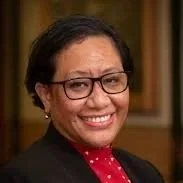
Mele Tupou Vaitohi
Mele Tupou Vaitohi is a Senior Lecturer in the Faculty of Law, Te Herenga Waka | Victoria University of Wellington, New Zealand.
In Pacific constitutional studies, written constitutions are often framed as postcolonial products – legal instruments adopted in the wake of empire. Tonga stands apart from this narrative. As the only Pacific Island nation never formally colonised (though it was a British protectorate from 1900 to 1970), Tonga developed its own constitutional order through a process that cannot be explained adequately by modern constitutional theory or legal pluralism. Instead, Tonga’s system is best understood through the idea of constitutional weaving – a framework that captures how Tongan leaders interlaced traditional authority with external legal ideas to produce a unified and distinctly Tongan constitutional mat.
What is Constitutional Weaving?
Constitutional weaving describes both a method and an outcome. It is the deliberate interlacing of different legal and cultural strands to create a coherent constitutional system. The metaphor draws from the crafting of the kie Tonga, the fine Tongan mat woven from softened pandanus leaves. These mats represent identity, authority, and social structure – much like Tonga’s Constitution itself.
Weaving emphasises that Tonga did not replace its traditions with foreign models nor adopt Western constitutionalism wholesale. Instead, its leaders wove together Tonga’s chiefly authority and kinship structure, Christian moral codes brought by missionaries, British/US constitutional principles, and international law and diplomatic strategy.
The result is a constitutional order that is neither purely Western nor strictly customary, but one that reflects Tonga’s own historical legacies and cultural logics.
A Strong Pre-Existing Governance Tradition
Long before European contact, Tonga had a sophisticated political system anchored in genealogy and rank. Authority flowed from the Tu’i Tonga and later Tu’i Kanokupolu lines, and law was embedded in ceremony, reciprocity, and chiefly responsibility. Tonga was not a political vacuum waiting to be shaped. It had an existing framework into which external ideas could be woven.
This is crucial. Tonga’s constitutional journey began from a position of cultural strength, not colonial disruption.
King Tupou I and the Project of Sovereign Modernisation
When King Tupou I sought to modernise Tonga in the 19th century, he did so with a strategic goal – to protect Tonga’s sovereignty in an age of expanding empire. He viewed Christianity, literacy, and written law as tools for international recognition and defence against colonisation.
Rather than adopting British models uncritically, Tupou I adapted them to fit Tongan leadership structures. Christian commandments became the moral backbone of early law codes, British-style institutions were reshaped to preserve the central role of the monarch, and external advisers were used. The predominance of British constitutional ideas reflected the influence of British advisers and missionaries, particularly the London Missionary Society, as well as Tonga’s strategic engagement with the British in seeking to safeguard its sovereignty.
Dr Guy Powles described Tonga’s 1875 Constitution as weaving together the ‘threads of Tongan and English legal cultures’ (see p 146 of this volume). This hybrid was not a compromise born of weakness, but a creative act of legal innovation that strengthened Tonga’s international position and affirmed its cultural foundations.
Why Modern Constitutionalism and Legal Pluralism Fall Short
Tonga’s experience exposes the limitations of Eurocentric theories of constitutional development. As political philosopher James Tully notes, modern constitutionalism often treats tradition as something to be overcome – a primitive remnant on the way to a more rational legal order. This perspective assumes that constitutions should be uniform and centralised; custom is inferior to written law; and Western models represent the endpoint of constitutional evolution.
These frameworks fit poorly in contexts where Indigenous systems hold longstanding legitimacy, authority, and coherence.
Tonga’s Woven Constitutional Approach
The 1875 Constitution was Tongan-made, not a colonial transplant. European ideas were used as references, not templates. Custom was not sidelined but woven into the written constitutional mat. Unlike many Pacific states that inherited dual systems after colonisation – state law and customary law operating in parallel – Tonga developed one woven system from the outset.
Legal pluralism, therefore, cannot fully explain Tonga’s constitutional reality. The relationship is not one of coexisting systems, but of interwoven strands forming a single mat.
The Enduring Strength of Weaving in Modern Governance
Constitutional weaving did not end in 1875. It continues to shape political practice and constitutional interpretation today.
Tonga’s constitutional text coexists with unwritten norms – much like the British system it drew from, which accommodates unconstitutional norms. This unwritten dimension provides space for customary concepts such as respect and rank; reconciliation practices, and the moral authority of the monarch.
As a result, formal law is constantly interpreted through cultural values, allowing the Constitution to remain rooted in Tongan identity.
The 2010 reforms – which expanded parliamentary elections and strengthened checks on executive power – illustrate modern weaving in action. While democratic structures were enhanced, the monarchy remained central. Tonga did not replace tradition with democracy; it wove democratic accountability into a framework still grounded in cultural authority.
In February 2024, the King advised that he no longer had confidence in certain members of Cabinet – an issue not expressly addressed in the Constitution. Critics questioned its constitutionality (see here for example). Yet the political resolution unfolded through customary protocol: the Prime Minister and Cabinet went and offered an apology to the King in accordance with Tongan tradition. This process restored political harmony in a way that merged legal authority with cultural expectation.
Events like this demonstrate that constitutional practice in Tonga relies on the interplay between written norms and customary processes. They also show how weaving continues to shape institutional behaviour in ways that Western constitutional categories cannot fully predict.
A Woven Constitution
Tonga’s constitutional story challenges assumptions about what a constitution must be. It shows that Indigenous systems can be central to modern constitutional design; external models can be used creatively without weakening sovereignty; and custom and written law can form one coherent normative order.
Tonga’s Constitution is thus best understood as a living mat, continually rewoven as new pressures, reforms, and political events unfold. Its durability comes from the fact that it is both anchored in Tongan tradition and open to new strands of law, governance, and societal change.
Constitutional weaving is like two rivers merging – each maintains its own source and character, yet together they create a single, more powerful current shaping the nation’s constitutional landscape.
This blog post is part of the IACL Blog symposium Small State Constitutionalism, which presents some of the key arguments made in chapters of the newly-published edited collection: Elisabeth Perham, Maartje De Visser and Rosalind Dixon (eds) Small State Constitutionalism (Hart Publishing, 2026).
Mele Tupou Vaitohi is a Senior Lecturer in the Faculty of Law, Te Herenga Waka | Victoria University of Wellington, New Zealand.
Suggested Citation: Mele Tupou Vaitohi, ‘Constitutional Weaving in Tonga, a Small State with Traditional Authority: A Theoretical Framework for Tonga’s Constitutionalism’ IACL-AIDC Blog (5 February 2026) Constitutional Weaving in Tonga, a Small State with Traditional Authority: A Theoretical Framework for Tonga’s Constitutionalism — IACL-IADC Blog


![Xx1088_-_Seoul_city_nightscape_during_1988_Paralympics_-_3b_-_Scan [test].jpg](https://images.squarespace-cdn.com/content/v1/5af3f84a4eddec846552ea29/1527486925632-3VZP3ASLAHP1LJI0D9NJ/Xx1088_-_Seoul_city_nightscape_during_1988_Paralympics_-_3b_-_Scan+%5Btest%5D.jpg)
