Paper Dragons or Promised Rebellions? The Paradox of Arab Constitutionalism
/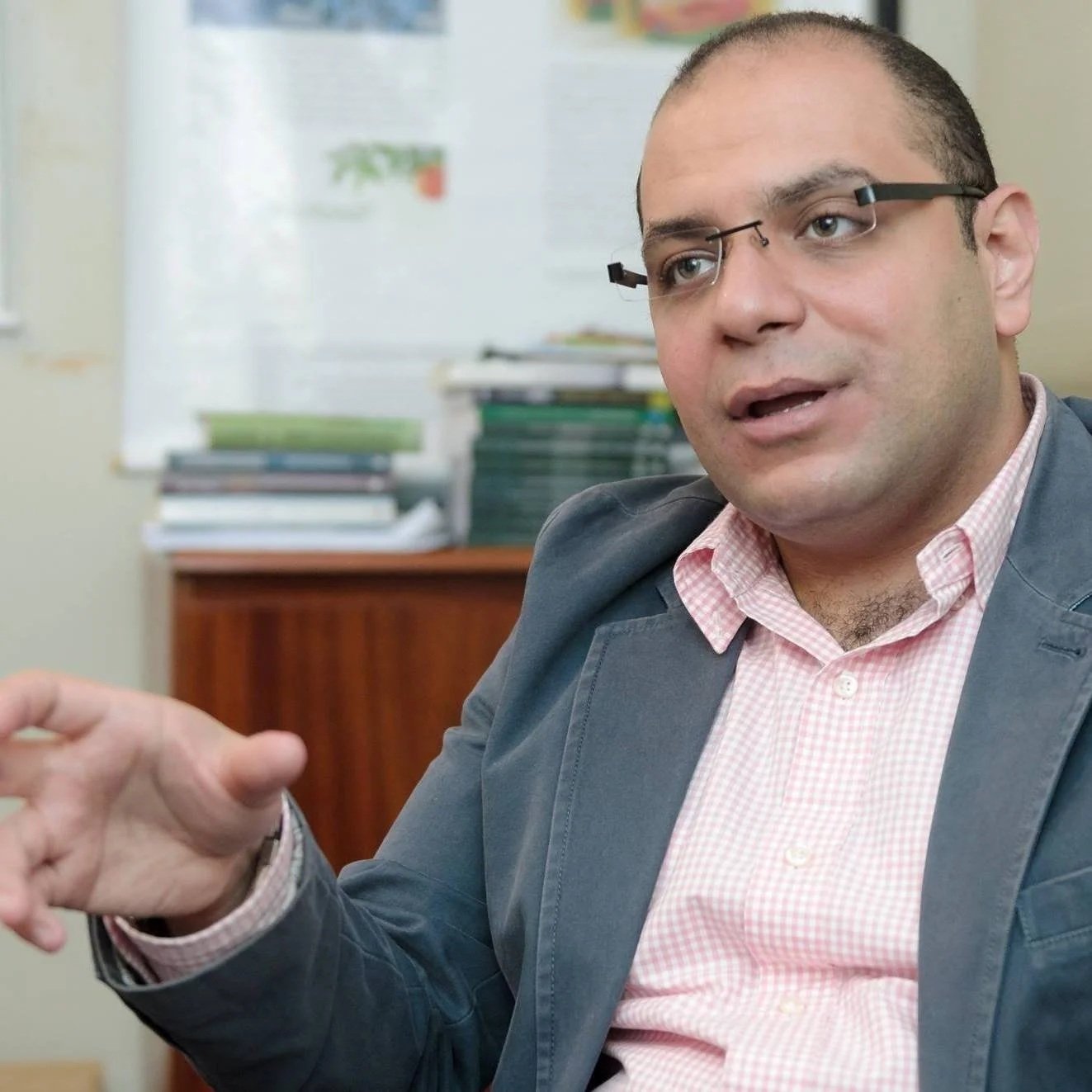
Mohamed Arafa
Professor of Law at Alexandria University Faculty of Law (Egypt) and an Adjunct Professor of Law & the Clarke Initiative Visiting Scholar at Cornell Law School. Beginning January 2027, he will join the Indiana University Maurer School of Law—Bloomington as a Visiting Scholar.
I. Introduction
The post-2010 constitutional trajectory of the Middle East and North Africa (MENA) region is an example of modern public law’s persistent paradoxes. The uprisings of the failed Arab Spring signaled what initially appeared to be an irreversible collapse of autocratic hegemony, precipitating a historical wave of constitution-making. A decade later, the regional landscape is defined not by consolidated democracies, but by legal stagnation and militarized executives (dominance/autocratic adaptation). In Constitution-Building After the Arab Spring: A Comparative Perspective, Francesco Biagi provides a theoretical framework for analyzing this dynamic. The post-uprising constitutions were fundamentally "organizational" rather than "transformational" instruments. Rather than effectively implementing genuine social contracts designed to reset state-society relations, constitutional texts were crafted under regime oversight to manage political crisis, neutralize popular mobilization and project international legitimacy, while preserving core power structures. The Constitutional Dissonance (pp. 268 ff.) concept—the striking coexistence of formal text-level innovation and deep structural continuity— is more acutely illustrated in Egypt. Egypt serves as a case of how an autocratic establishment utilizes constitution-making processes and judicial institutions to survive, adapt and entrench authority. It is significant to address this perplexing question: why should legal scholars rigorously analyze constitution-building in a geographical region where democratization has so spectacularly stalled, and reversed back into entrenched authoritarianism? Applying Biagi’s framework to Egypt’s constitutional evolution reveals how the institutional capture of the Supreme Constitutional Court (SCC) dictates the operation of judicial review. This post illustrates how formal legal guarantees (e.g., judicial independence) are systematically neutralized and weaponized by the state, concluding with normative recommendations for future Egyptian constitutional reform.
Transformational Myth (Egypt’s Constitutional Trajectory): A foundational pillar of Biagi’s critique rests on process design: procedural deficits during the constitution-making directly dictate constitutional outcomes (pp. 13 ff.). When ruling elites, military establishments, and entrenched-state bureaucracies control the drafting mechanism rather than the public participating as equal stakeholders, the resulting text inevitably reflects a Faustian bargain. Citizens are offered symbolic rights and institutional blueprints in exchange for leaving the dictatorial state’s structural core untouched. Egypt’s constitutional trajectory post-2011 exemplifies institutional capture across successive iterations. The authoritarian continuity mechanisms were embedded directly into 2014 structural constitutional provisions (e.g., retaining vast presidential emergency powers).
II. Judging Sharie‘a: The SCC-Judicial Review
Ideally, a democratic system creates space for diverse religious perspectives to coexist, ensuring that no single religion dominates the public sphere while safeguarding individuals’ freedom to practice, change and reject religion. This raises a fundamental inquiry: how should courts approach religious clauses in constitutions when exercising judicial review?
Central to Biagi’s account of post-Arab Spring legal orders is the “constitutional justice” question (pp. 140 ff.). MENA’s constitutional courts were established or reconfigured to expand judicial review and constrain executive power. Yet Biagi cautions against viewing these courts in binary terms—as the rule of law’s guardian (authoritarianism’s tool). Rather, they operate within fragile institutional environments shaped by political pressures, structural constraints, institutional survival, and judicial culture. Egypt’s SCC- the highest court in the land - offers a revealing case of this complexity. Historically (1980s-1990s), the SCC carved an impressive degree of jurisprudential independence in protecting private property rights, economic liberalization, and procedural civil rights. Yet this activism operated within boundaries defined by the authoritarian regime—which allowed the Court to challenge the executive on secondary matters—so long as its decisions did not threaten the regime’s core political interests.
Interpreting the Islamic Law Battle: Article 2 Jurisprudence: The interpretive authority of the SCC over Islamic law became a central flashpoint during the post-2011 constitutional drafting processes. A defining arena of the SCC’s interpretive power lies in its Article 2 constitutional jurisprudence, which reads “the principles of Islamic Sharie‘a are the principal source of legislation.” Rather than allowing Article 2 to serve as a vehicle for conservative religious vetoes over state law, the SCC developed a sophisticated and modernist interpretive framework designed to balance religious legitimacy with state-led economic modernization and civil stability. Such clauses shake up philosophies of required empathy between constitutionalism and democratic liberalism. In seminal rulings, the SCC formulated a two-tiered test to evaluate statutory compliance with Article 2. It progressively developed jurisprudence governing complicated inquiries arising from Shārīe‘ā-constitutional tasks to state legislation. Statutory provisions violate it only if they contradict alAhkam alQati‘yya (absolute) divine norms that are indisputable in their textual authenticity and meaning.
For issues involving alAhkam alZanniyya (presumptive) principles, where religious texts are open to interpretation, it ruled that state legislative authority possesses ījtīhad (full discretion) to adopt laws serving ālmāslāh (human welfare), issuing decisions beneficial to the common good, provided they align with māqasīd ālShārīe‘ā (overarching objectives), and considering commonly agreed qāaw‘īd fīqhīyāh (interpretive legal maxims), especially the principle of “lā dārār wā lā dīrār” (no harm/no retribution). The SCC effectively secularized the application of Islamic law within state institutions, insulating state policies from challenges by traditional religious authorities while positioning itself as the sole authoritative interpreter of Islamic fiqh (jurisprudence) in the constitutional sphere. Under the Islamist (Morsi Administration), conservative factions sought to curtail the SCC’s Shārīe‘ā teleological interpretation by introducing Article 219 into the 2012 de facto Constitution. It defined Shārīe‘ā principles using traditional Sunni fiqh (classical methodological) rules, representing an explicit attempt to force SCC toward conservative religious rigid legal interpretations by implementing the literal meaning of the text, not the philosophy beyond it.
Following the July 2013 political coup, Article 2 has been restored to a standalone, Article 219 was repealed, and the current text reaffirmed the SCC’s exclusive authority to interpret moderately Islamic principles – restoring the court’s role as a judicial stabilizer – capable of mitigating religious polarization and protecting the legislative state’s sovereignty. When Islamic sources lack explicit guidance, judges must derive rulings by engaging in legal reasoning to align with the purpose and underlying philosophy of the law in Islamic areas and “what social results the Shārīe‘ā presumptive rulings seem to promote.” Thus, it isn’t only judges whose interpretations are significant; rather, a major democratic impulse comes from the intrinsic constitutional interpretation: “who lives the norms may interpret the norms.”
III. Constitutional Justice and Judicial Capture
Following the uprisings, the expansion of judicial review and the creation and strengthening of specialized constitutional jurisdiction were celebrated by legal reformers as critical mechanisms for protecting human rights, upholding the rule of law, and checking executive overreach. However, the status quo reveals a stark, deeply disappointing divergence between formal constitutional design and judicial enforcement. Constitutional courts were routinely subjected to judicial capture by the executive and political intimidation. Autocratic regimes systematically undermined the independence of constitutional courts—ending periods of strategic judicial activism and transforming them into instruments of executive power through controlled appointments, political pressure, and structural court-packing. Biagi illustrates how constitutional courts were frequently weaponized by autocrats to perform "autocratic legalism" by using formal rulings to dismantle political opposition, invalidate democratic election results, or legitimize executive power grabs under a facade of legal regularity (pp. 155 ff.). Tunisian President Saied recently seized emergency powers (without a functional constitutional court to review the legality of his actions). Ultimately, constitutional justice mechanisms in the post-Arab Spring era functioned less as counter-majoritarian safeguards for fundamental liberties and more as legal tools for regime consolidation and selective state control.
Furthermore, the SCC acted as an aggressive political arbiter (e.g., invalidating election laws). However, any expectation that the SCC would maintain an assertive posture against the post-2014 restored security state was rapidly dispelled. Recognizing that an independent constitutional tribunal posed a potential institutional threat, the regime implemented an informal dual strategy (political alignment and formal structural subordination). In cases related to political rights and state security cases, the SCC adopted a deference posture, employing procedural avoidance techniques to validate restrictive statutes (see the Protest Law 2013; 2015 counterterrorism legislation). Regarding socioeconomic guarantees, the administration utilized budgetary accounting to circumvent mandatory healthcare while the judicial apparatus declined to enforce these thresholds, transforming core social justice guarantees into a “dead letter.” The SCC institutional subordination was finalized in the 2019 constitutional amendments, granting the President sole authority to select the SCC’s President, while subsequent statutory changes entitled the executive to bypass SCC rulings determined to conflict with national security.
IV. The SCC and the Deep State: Legalizing "Constitutional Dissonances"
The SCC sits at the heart of the dynamic between formal constitutional texts and the dawla ‘amiqa (deep state) (the “written v. unwritten” constitutions, in Biagi’s words (pp. 272-273)). Rather than operating as an independent counterweight to executive overreach, it functions as a legal mechanism through which constitutional dissonance is managed. The court’s operational role reveals how high-level judicial institutions act as vital conduits for informal authoritarianism, ensuring that guarantees on paper never disrupt the core security apparatus. The legal instrument facilitating this dynamic is the doctrine of a‘mal al-siyada (sovereignty acts), also discussed by Biagi (pp. 147-148). Historically designed to protect core foreign policy and military directives from being litigated in the high court, the SCC have systematically broadened this classification to insulate regime maneuvers (sweeping counterterrorism measures) from constitutional challenge. When the SCC declines jurisdiction on sovereignty or national security grounds, it validates executive action without explicitly striking constitutional rights. This creates a legal shield that allows the government to operate outside constitutional constraints and preserving formal pretense that the rule of law governs state action, which confirms the SCC dual identity’s principal architect. Because the court established a progressive liberal interpretation record, its ongoing operations grant the regime external legitimacy. By maintaining procedural rigor in minor disputes while deferring to national security establishments on core civil rights, the SCC continuously reproduces constitutional dissonance as a deliberate strategy of autocratic survival. The alignment between the court and the deep state is demonstrated by the progressive capture of the SCC itself. While Egypt’s constitution guarantees judicial independence, the deep state used its informal power to eventually codify its control over the court. Consequently, the very institution designed to safeguard constitutional rights was absorbed into the state’s security apparatus. This structural integration demonstrates how deep-state power ultimately dictates the scope and enforcement of the highest law in the land, which is the constitution.
V. Conclusion: Lessons for Egypt’s Constitutional Future
Assessing the constitutional status quo offers a robust legal framework for post-uprising: constitutions under the autocratic regime are designed to preserve existing power relations rather than facilitate democratic transformation. Egypt’s post-2011 constitutionalism confirms this insight. The Constitution and the Shārīe‘ā Caselaw, and the SCC’s institutional capture demonstrate how constitutional texts and judicial review can be co-opted to erect a durable authoritarian survival model. However, as persistent challenges and underlying political and social tensions within Egypt indicate, constitutional trajectories are rarely static. Durable constitutionalism cannot be realized merely by elegant legal texts imported from foreign institutional blueprints. If Egypt is to break its cycle of autocratic constitutionalism, future reforms must move beyond surface-level organizational changes to address the underlying structural, institutional, and procedural imbalances of power. Based on the lessons of the Egyptian experience, future constitutional reforms must incorporate four structural corrections executed through rigorous statutory and constitutional restructuring.
First, process design must be restructured to establish genuine pre-constitutional consensus. Future constitution-making must not be assigned to military-appointed bodies or politically dominant factions, but rather to assemblies reflecting verifiable parity across political and civil society, and legal sectors. Prior to text drafting, politicians and security establishments must agree to binding supra-constitutional principles that guarantee civilian supremacy, democratic power rotation, and human rights.
Second, structural judicial independence must be legally secured by repealing executive appointments. The Constitution and statutes must be amended to strip the executive of the power to make judicial appointments, re-establishing judicial self-selection by seniority, nomination, merits and peer election. The government must dismantle specialized emergency and terrorism circuits within civilian courts, restoring standard criminal jurisdiction operating under constitutional due process.
Third, the legal order must demilitarize to establish civilian supremacy across state bodies. To establish a coherent link between the normative rules and the structural judicial independence’s deficiencies, the SCC’s history of procedural deferral, jurisdictional retreat, and enforcement failures must be eliminated (the court’s structural reform is a prerequisite to dismantling military autonomy and realizing constitutional rights). Eliminating military trials over civilians removes the court’s ability to shelter military overreach under the necessity doctrine. By subjecting military governance and budgetary allocations to civilian constitutional review and principles, the SCC would be stripped of its practice of carving out exception zones for the security state, forcing it to evaluate military institutions.
Finally, the constitution must ensure direct justiciability of socioeconomic guarantees. To prevent constitutional budget allocations for public services from remaining dead letters, constitutional provisions must explicitly grant legal standing to individuals and civil society to initiate compliance actions before the SCC when state budgets fail to meet constitutional spending. In doing so, state fiscal reporting must require adherence to clear auditing benchmarks for operational and capital expenditure in public delivery systems, effectively eliminating creative accounting practices.
Moving beyond black-letter analysis to examine how constitutional texts interact with political power, judicial capture and social mobilization offers a nuanced understanding of constitutionalism as a product of both law and political context. The distinctiveness of national legal traditions can complicate broader conclusions about constitutional courts’ role in democratic governance. By understanding post-Arab Spring legal orders as ongoing sites of contestation or elite recalibration, scholars and future reformers can look beyond textual guarantees. Only by dismantling the security state’s power, protecting judicial review, and ensuring procedural inclusivity can Egypt establish a legal order transition from an autocratic organizational tool into binding social contract. Even under the shadow of renewed authoritarianism, these constitutional texts stand as historical markers of popular demands for dignity, political accountability—an enduring legal reference that will inform future reform waves, and constitutional legitimacy across the MENA. This is how parchment promises, even manipulated by autocrats, inevitably planting the dangerous seeds of democratic reckoning’s future.
Mohamed Arafa, SJD, is a Professor of Law at Alexandria University Faculty of Law (Egypt) and an Adjunct Professor of Law & the Clarke Initiative Visiting Scholar at Cornell Law School. Beginning January 2027, he will join the Indiana University Maurer School of Law—Bloomington as a Visiting Scholar.
Suggested Citation: Mohamed Arafa, Paper Dragons or Promised Rebellions? The Paradox of Arab Constitutionalism’ IACL-AIDC Blog (1 October 2026), Paper Dragons or Promised Rebellions? The Paradox of Arab Constitutionalism


![Xx1088_-_Seoul_city_nightscape_during_1988_Paralympics_-_3b_-_Scan [test].jpg](https://images.squarespace-cdn.com/content/v1/5af3f84a4eddec846552ea29/1527486925632-3VZP3ASLAHP1LJI0D9NJ/Xx1088_-_Seoul_city_nightscape_during_1988_Paralympics_-_3b_-_Scan+%5Btest%5D.jpg)
