The Constitutional Trap and Military Dominance in Sudan's Transition
/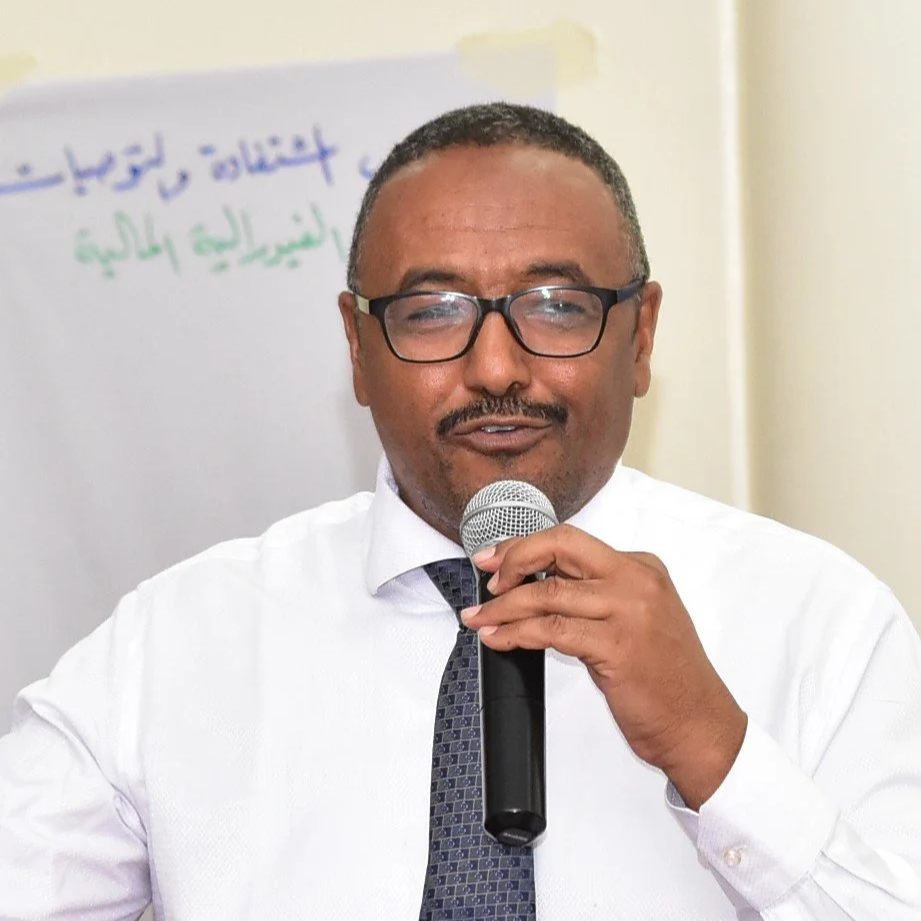
Sami Abdelhalim Saeed
the Vice President of the African Network of Constitutional Lawyers.
Partnership or Power Grab? The Fates of Sudan’s 2018 Uprising
Sudan experienced a wave of youth-led revolutionary activity in 2013; however, the military establishment, backed by the ideology of the Muslim Brotherhood, employed heavy weaponry to suppress the movement. In December 2018, civilian groups renewed their efforts through a widespread civil disobedience campaign. Professional unions, civil society organizations (CSOs), resistance committees, and political parties, collectively known as the “Forces of Freedom and Change” (FFC), succeeded in mobilizing millions and ousting Omer Al-Bashir, who had ruled the country for 30 years through authoritarian policies. Thus, the December 2018 revolution became the third major civil uprising against military rule in Sudan since the country gained independence in 1956.
The process of dismantling one of Africa's oldest military regimes through peaceful civil resistance differed markedly from other Arab Spring movements in the region. The ruling military elite attempted to undermine the revolution's momentum by announcing the removal of Omer al-Bashir and forming a security committee intended to dampen the revolutionary fervor. However, this arrangement failed to convince the public, and the revolution persisted; protesters demanded a transfer of power to civilian authorities, to which the military leadership responded by killing hundreds of young activists outside military headquarters. Despite sustained peaceful civil disobedience, the military did not fully relinquish control; instead, the leadership of the Sudanese Armed Forces (SAF) and the Rapid Support Forces (RSF) sought to preserve their economic monopolies and political influence through power-sharing agreements. Eventually, the African Union brokered negotiations between the military generals and the revolutionary coalition led by the FFC. This process culminated in a political agreement establishing a partnership between military and civilian actors to oversee a transitional period leading to democratic elections.
This post presents a comparative constitutional analysis of the relationship between military institutions, civilian political parties, and civil society organizations in Sudan during the democratic transition following the popular uprising of December 2018. This period is shaped by a historical pattern of power struggles, brief democratic transitions, and persistent institutional friction. The analysis in this post engages with Francesco Biagi's book Constitution-Building After the Arab Spring: A Comparative Perspective (CUP 2025) as an intellectual foundation. My aim is to extend, test, challenge, or refine these claims through comparative constitutional analysis.
An examination of revolutionary uprisings in Sudan which took place in October 1964, April 1985, and December 2018, along with transitional documents such as the 2019 Constitutional Charter and the 2020 Juba Peace Agreement (JPA), provides critical insights into the challenges with establishing sustainable governance. The status of the military institution in 2018 is radically different from its roles in 1964 and 1985. After thirty years (1989–2019) of military rule, characterized by unaccountable authority, corruption, economic privileges, and complex regional networks, the military leadership has demonstrated a diminishing interest in democracy, the rule of law, and reform initiatives. This position was reinforced by the support of other official and semi-official security institutions, including the RSF. Consequently, persuading the military generals to transfer power to a civilian-led government proved much more difficult than during the 1964 and 1985 revolutions. Having consolidated their positions and authority, the military leaders viewed themselves as the legitimate guardians of the state and showed no willingness to relinquish control to civilian actors.
Designing the Military-Civilian Partnership
On August 17, 2019, four months after the ousting of President Omer al-Bashir on April 11, 2019, the FFC and the Transitional Military Council (TMC) signed a Constitutional Charter aimed at guiding Sudan through a transitional period toward a civilian-led, democratic government. Following months of intensive negotiations, the signing of the 2019 Constitutional Declaration - alongside a related political agreement reached just weeks earlier - appeared to have averted the threat of civil war. Given Sudan's history, where two previous popular uprisings had resulted in military dictatorships, there were widespread fears that this transition might meet a similar fate. Two and a half years later, those fears became reality. On October 25, 2021, the military arrested and detained the prime minister and several other civilian leaders. It also suspended the provisions of the 2019 Constitutional Charter regarding the formation of the Transitional Sovereignty Council (TSC) and the transitional cabinet, announcing a takeover of power as necessary “corrective measures” in response to the political deadlock and the severe economic crisis. Weeks later, the military reconstituted the government under a new political agreement signed by the reinstated Prime Minister Hamdok, a move that sparked shock and outrage among Sudanese protest groups, civil society organizations, and armed movements. This sequence of events raises questions about the predictability of outcomes and whether the drafters of the constitution had anticipated the possibility of such developments.
The Constitutional Trap
Drawing on the case of Egypt after the fall of Mohammed Morsi, Professor Biagi’s book highlights the direct intervention of the military establishment in terminating constitutional experiments. The military's assumption of power effectively halted the transition process, illustrating the fragility of constitutional provisions when military leadership maintains parallel authority. Applying Biagi's observations to Sudan, the TMC played a central role in drafting the transitional constitution, negotiating each article to protect its own position and interests. Nevertheless, during this period, FFC and TMC, failed to achieve the constitution's primary objective (e.g., establishing the foundations for a peaceful and democratic Sudan following the al-Bashir era). Neither party succeeded in sustaining the military-civilian partnership or safeguarding the country’s democratic transition. This failure can be attributed primarily to fundamental structural flaws, ambiguity in the allocation of powers, and the absence of effective accountability mechanisms, as demonstrated by the following elements:
(a) Flawed Institutional Design and Power Imbalance: The transitional Constitutional Charter established the TSC as an 11-member body, consisting of five military officers, five civilian leaders, and one jointly selected civilian. The chairperson role was divided into two terms, with the military presiding during the first term and a civilian presiding during the second. The TSC was responsible for overseeing the democratic transition, ratifying legislation, and commanding the armed forces. However, instead of serving a symbolic role, the TSC consolidated power, assumed Cabinet responsibilities, and blocked key civilian initiatives. The military initially assumed leadership of the TSC, with a transition to civilian leadership scheduled for the latter half of the process. TMC’s Generals exercised their authority within the TSC to obstruct civilian initiatives, particularly legislation that posed a threat to TMC interests or diverged from their preferred governance strategies. These civilian priorities included transitional peace negotiations leading to the JPA in 2020, the dismantling of the authoritarian structures, anti-corruption efforts targeted at Omer al-Bashir and his political parties, and the transfer of al-Bashir to the International Criminal Court (ICC). The concentration of power in the military has effectively led to the hijacking of the government’s executive authority.
(b) Lack of Military Accountability to the Public: Another form of executive power capture is evident in Article 37(12) of the 2019 Constitutional Charter. This provision assigned the military the responsibility of reforming itself and maintaining disciplinary control over the armed forces, without establishing mechanisms for military accountability to the civilian government or financial oversight of the military’s huge commercial assets. Although the TMC participated in constitutional negotiations and agreed in Article 37(12) that reforms require legal mechanisms to remove loyalists from the security sector and ensure military commercial enterprises are auditable, Article 37(12) has never been implemented. No committees were formed or any policies were put in place to implement this mandate, due to the lack of willingness among military leaders to accept accountability or undergo reform. This exclusion of civil society and political parties from the reform process has strengthened the independence of the military and contributed to institutional gridlock, ultimately resulting in the military coup in October 2021.
(c) Absence of Checks and Balances: The Transitional Legislative Council (TLC), intended to serve as the third branch, beside the executive and judicial branches, of the transitional authorities, tasked with overseeing the Transitional Cabinet and enacting legislation, was never established. Although the TLC had not yet been formed, Article 24 of the Constitution Charter anticipated this scenario. It authorizes the TSC and the executive authority, acting jointly, to exercise legislative powers and perform the functions of the TLC until its establishment. Consequently, the transitional political process lacked parliamentary oversight. In some instances, military members of the TSC delayed legislation that could adversely affect their personal or institutional interests. This institutional dysfunction and the lack of effective checks and balances were most evident in the failure to enact legislation governing key judicial bodies, such as the Constitutional Court (Article 31) (as happened also in Tunisia) and the Supreme Judicial Council (Article 28). As a result, the civilian government lacked a legal forum to challenge military overreach or enforce constitutional rights. A weak (or sometimes even non-existent) system of checks and balances was also a distinguishing feature of most post-Arab Spring constitutions, as illustrated by Biagi in his book.
(d) Incompatibility of constitutional arrangements with political changes: The 2019 Constitutional Charter didn’t make provision for conflicts erupting between partners of the transitional government. Overlapping powers led to direct power struggles. For example, as stipulated in (Article 11-1-p) of the Constitutional Charter, the TSC was assigned the task of "sponsoring the peace process" while the Transitional Council of Ministers (the Cabinet) was assigned the task of "building peace" (Article 15 -2). Moreover, Article 21.2 of the JPA stipulates that the terms of the agreement supersede the 2019 Constitutional Charter in the event of conflict between them, effectively placing political/peace agreement above the supreme constitutional law. The JPA brought about fundamental changes in the form and functions of the government, which in turn led to amendments to the transitional constitution.
Conclusion
The trajectory of post-colonial Sudan starkly substantiates Professor Charles Fombad’s assertion in his Chapter Title, "The Military, Constitutionalism and Democracy in Africa" (2016, p. 337), in the book: Separation of Powers in African Constitutionalism (Oxford Constitutional Theory series) that "armies pose the greatest threat to constitutionalism and democracy." The collapse of the post-2018 transition lays bare how entrenched military interventions and disingenuous power-sharing agreements systematically undermine democratic progress. Far from charting a durable path to civilian governance, the 2019 Constitutional Charter was structurally flawed from the outset. The Charter concentrated executive authority in ways that favored the military, reinforced military autonomy, and shielded military institutions from accountability. The Charter’s lack of parliamentary oversight and weak military-civilian relations during the political transition created a constitutional trap, preventing sustained political stability, peace, and democratic transformation. This conclusion is articulated in Biagi’s book, which examines how post-uprising constitutional drafting processes in countries – such as Egypt and Algeria – controlled or influenced by armed forces resulted in textual guarantees that preserved military privileges. Sudan is another example – to use Biagi’s words – where “sovereignty […] continues to be held (and not only exercised) […] by military […] leaders, who are the fulcrum around which the entire system rotates” (p. 138).
Sami Abdelhalim Saeed, LL.D is the Vice President of the African Network of Constitutional Lawyers.
Suggested Citation: Sami Abdelhalim Saeed, ‘The Constitutional Trap and Military Dominance in Sudan's Transition’IACL-AIDC Blog (6 October 2026) The Constitutional Trap and Military Dominance in Sudan's Transition


![Xx1088_-_Seoul_city_nightscape_during_1988_Paralympics_-_3b_-_Scan [test].jpg](https://images.squarespace-cdn.com/content/v1/5af3f84a4eddec846552ea29/1527486925632-3VZP3ASLAHP1LJI0D9NJ/Xx1088_-_Seoul_city_nightscape_during_1988_Paralympics_-_3b_-_Scan+%5Btest%5D.jpg)
