
Key Ideas in Law: The Concept of Fairness
/
Brice DICKSON
This book explores how the concept of fairness is used in different legal fields to ensure that the laws we live under are just and reasonable.
Read MoreThis book explores how the concept of fairness is used in different legal fields to ensure that the laws we live under are just and reasonable.
Read MoreThe volume has three broad categories of paper: country studies which consider the evolution of public law within a particular jurisdictional context; historical studies, which shed light on the foundations of public law; and studies of contemporary and future issues, namely populism, COVID-19, protection of Indigenous peoples, and the public-private divide.
Read MoreOver the past two decades, liberal constitutionalism has been in decline. Yet some courts - including the U.S. Supreme Court, the Supreme Court of India, and the Hong Kong Court of Final Appeal - have continued to progressively realize the rights of lesbian, gay, bisexual, transgender, and queer (LGBTQ+) persons.
Read MoreWhat does free speech mean? In this book, Paul Wragg argues for a universal formulation of free speech drawn exclusively from autonomy. He demonstrates that although the right has some applicability to the horizontal plane, it is more restrictive in some contexts, and more empowering in others, than the literature presently recognises.
Read MoreThis book tackles the most pressing problems of contemporary free speech law by examining where the idea of free expression came from in the first place, applying the lessons of the past to address the challenges of the present.
Read MoreThis book presents an empirical analysis of the UK Supreme Court’s output over its first ten years, with a specific focus on each individual judge’s contribution to each case
Read MoreThis book offers a key point of reference for reflective and thoughtful examinations of the rule of law in tax and related disciplines.
Read MoreThis book is a unique contribution to comparative legal studies by presenting the results of empirical research on the use of foreign precedents in constitutional interpretation in 31 jurisdictions worldwide.
Read MoreThis book identifies 2 polarising concepts used by Brazilian sociology to explain the formation of Brazil as a society: corruption and human rights.
Read MoreThis book provides a contextual analysis of the constitution of the European Union which, unlike most constitutions, does not belong to a state.
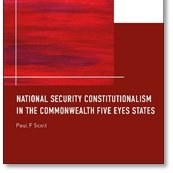
Read MoreThis book examines the constitutional treatment of national security in the United Kingdom, Canada, Australia, and New Zealand. These four states share their Commonwealth heritage and are also members, alongside the United States, of the Five-Eyes intelligence-sharing alliance
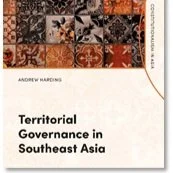
Read MoreThis book assesses territorial governance (that is, all forms of subnational governance) as a constitutional artefact in five Southeast Asian countries - Indonesia, Malaysia, Myanmar, the Philippines, and Thailand.
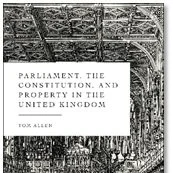
Read MoreThis book considers whether Parliament recognises a constitutional right to property. It reviews legislation and debates from the Middle Ages through to more recent legislation, and covers a wide range of topics, such as land reform, nationalisation, taxation, regulatory laws and retrospection. It also looks at the most recent debates and considers the relevance of constitutional thinking to recent election manifestos of the main political parties.
Read MoreWhat factors drive constitutional change and sustain positive transformation? How are democratic values recognised, restored, and preserved through constitutional change? Democratic Consolidation and Constitutional Endurance in Asia and Africa is a well-articulated response to the growing scholarly conversation on democratic backsliding and resilience.
Read MoreThis is a collection of essays from Dieter Grimm, one of Germany’s most important constitutional lawyers. The book considers the fundamental questions under scrutiny today: are constitutional courts political or legal institutions? Is judicial review a political or a legal activity? Is it a threat to or a condition of democracy? Should these courts be abolished or strengthened? Is a rational interpretation of constitutional law possible?
Read MoreThis book examines the operation of the rule of law in the non-liberal democracy of Singapore.
Read MoreThe rule of law, or Rechtsstaatsprinzip, is one of Germany’s oldest constitutional principles and forms part of Germany’s constitutional self-understanding. This book critically examines to what extent this key constitutional principle has translated into a reality for all.
Read MoreThe 1st edition of this seminal text was written as a response to the constitutional crisis of 2009, sparked by the 'expenses scandal', which led a general distrust of the UK's entire political order.
Read MoreThis book examines the European Court of Justice’s principles relating to composite decision-making. Through rigorous case law analysis, it shows how these rely on national and Union observance of rule of law requirements…
Read MoreThis book reassesses AV Dicey's legacy in political and legal thought through the reflections of leading scholars who consider his importance not only in today's British constitutional and legal culture but also in other foreign constitutional cultures…
Read MorePowered by Squarespace.